
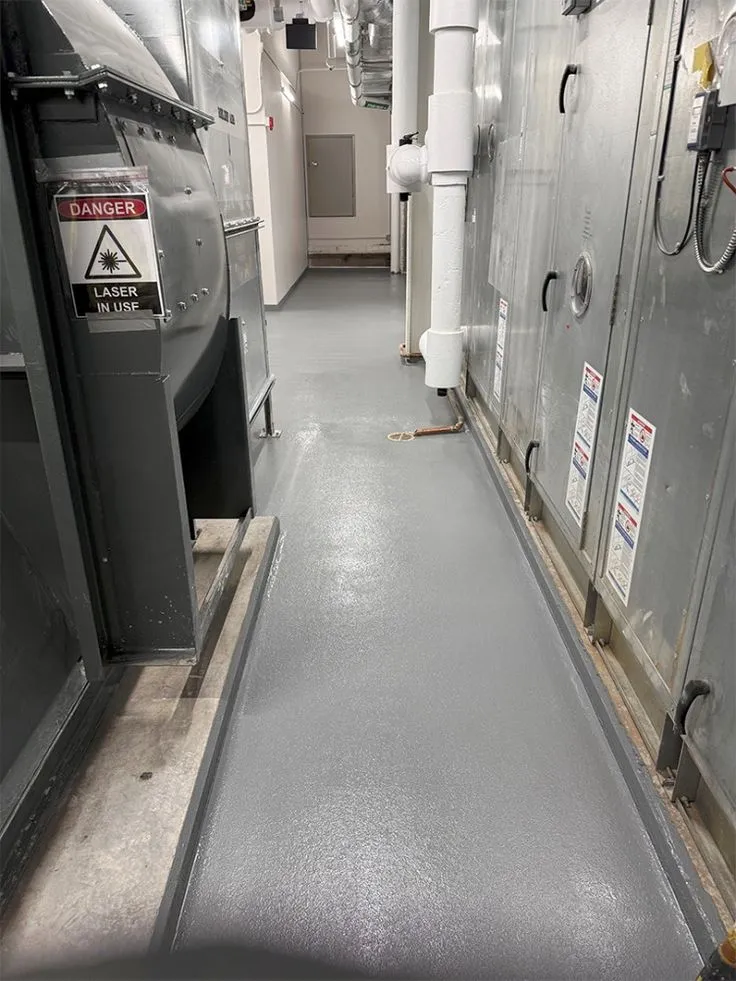
Replacing boilers, pumps, generators, air-handling units, or other mechanical equipment is usually planned around efficiency, reliability, and building performance. The floor beneath that equipment may receive far less attention. Yet equipment replacement creates a rare opportunity to inspect concrete that may have remained inaccessible for years. Old anchor holes, oil stains, cracks, worn coatings, and previous repairs can become visible once machinery is removed. Addressing these conditions before the new equipment arrives can prevent flooring problems from becoming difficult to reach again.
Equipment Can Hide Years of Wear
Large mechanical units often remain in the same position for decades. During that time, technicians may see only the accessible perimeter while the concrete beneath frames, bases, and supports remains hidden.
Once equipment is removed, the exposed area may reveal staining, chipped concrete, corrosion-related residue, or failed patches. These conditions should be inspected before replacement machinery occupies the same space.
Photographs and maintenance records can also help identify whether leaks or previous repairs occurred around the old equipment.
Old Anchor Points Need Repair
Removing machinery frequently leaves anchor holes, bolt locations, and damaged concrete around equipment bases. If these defects are ignored, they can create irregularities beneath a future flooring system.
Facilities considering Mechanical Room Flooring In Usa should include these former equipment locations in the repair scope. Loose material can be removed, damaged areas evaluated, and suitable repair products installed before subsequent resinous layers are applied.
A stable substrate provides a better foundation for both the new floor and the equipment returning above it.
New Equipment May Change Floor Loads
Replacement equipment is not always identical to what it replaces. New pumps, HVAC systems, or generators may have different dimensions, mounting locations, weights, or vibration characteristics.
Facility teams should provide these details during flooring planning. A location that previously experienced light service traffic may become a heavily loaded equipment base, while an old machine footprint may become an open maintenance aisle.
Understanding the future layout helps the flooring specification respond to how the room will operate after modernization.
Leaks Can Reveal Substrate Problems
Old machinery may leave behind evidence of water, coolant, oil, or chemical leaks. These substances can affect porous concrete if the previous protective surface was worn or damaged.
Surface staining alone does not reveal the full condition of the slab. Once old coatings are mechanically removed, contractors may find contamination or weak concrete that needs additional attention.
The purpose of preparation is to create a suitable substrate rather than simply cover visible discoloration.
Preparation Is Easier While the Room Is Open
Mechanical rooms are notoriously difficult to prepare once they are filled with equipment. Pipes, pumps, cabinets, and support frames restrict access for grinding machinery and repair work.
Equipment replacement temporarily creates more open floor area. A contractor found through an Online Epoxy Floor Installer In Green Brook search should still be evaluated on how it approaches mechanical preparation, cracks, moisture, joints, and difficult perimeter details rather than convenience alone.
Using this temporary access can allow a more consistent flooring installation than trying to work around newly installed machinery later.
Reconsider Maintenance Routes
Modernization can change the way technicians move through the room. New service clearances, control panels, drain locations, or access routes may alter where employees stand and move equipment.
Floor texture should reflect these changes. Areas prone to condensation or service-fluid exposure may benefit from additional traction, while dry maintenance routes may prioritize easier cleaning.
The objective is to support safe access without making the entire room unnecessarily rough.
Coordinate Flooring With Equipment Installation
Sequencing matters. If replacement machinery is installed before floor repairs are complete, access may be lost again. If the finished flooring is installed too early, later construction activity can damage it.
Project teams should coordinate demolition, concrete inspection, repairs, substrate preparation, resin application, curing, and new-equipment placement as one schedule.
Anchoring, rigging, and heavy machinery movement should occur only when the flooring system is ready for that stage of work.
Create a New Maintenance Baseline
After modernization, facility managers can document the new floor and equipment layout. Records should identify repaired cracks, former anchor locations, joints, drains, and areas that experienced previous leakage.
These records give maintenance teams a baseline for future inspections. If staining, cracking, or coating damage appears later, managers can determine whether it is developing in a previously vulnerable location.
Conclusion
Mechanical equipment replacement offers more than an opportunity to modernize building systems. It also provides temporary access to concrete that may have been hidden beneath machinery for years.
By inspecting old equipment footprints, repairing anchor damage, addressing contamination, reviewing future loads, and coordinating flooring work with installation schedules, facility managers can resolve problems before access becomes restricted again. Treating the floor as part of the modernization project can create a cleaner, more maintainable mechanical room and provide a stronger foundation for the equipment expected to operate there for years to come.
